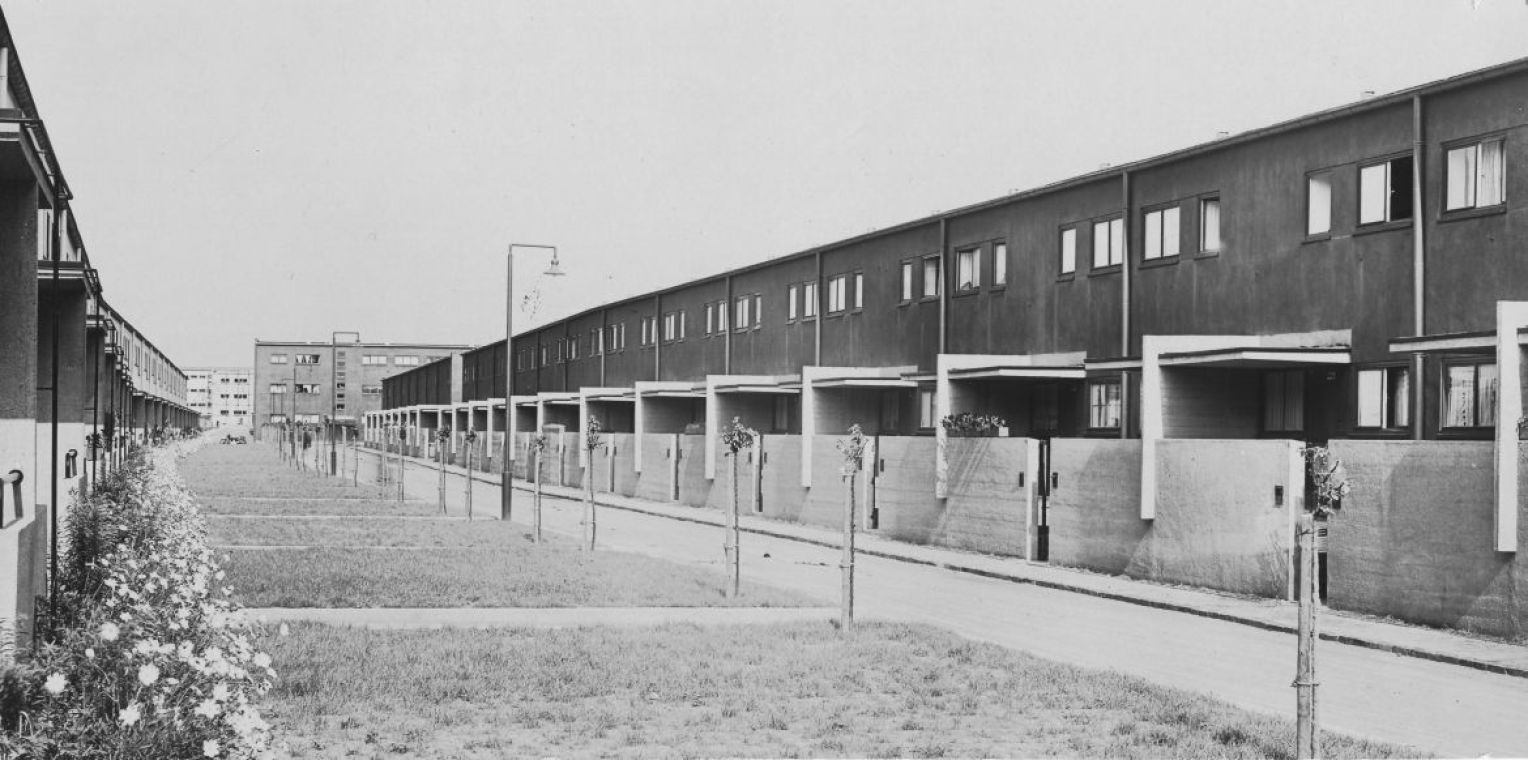
Siedlung Römerstadt, Frankfurt. Straße Im Burgfeld, Architekten: Ernst May mit Carl-Hermann Rudloff u. a., 1927-28, Fotograf: Max Göllner © Ernst-May-Gesellschaft, Frankfurt
The Rise of the Modern City 1925–1933: Frankfurt, Vienna and Hamburg - Three Models in Comparison
After the First World War, the large cities in Germany and Austria witnessed and suffered from change in all areas. Instead of a monarchy, democratically constituted republics had emerged, with universal voting rights for men and women. However, the gain in freedom was initially accompanied by food shortages, economic crisis, currency devaluation and, above all, an acute housing shortage. During the First World War, as well as afterwards, hardly any housing had been built. Both in Vienna and in the major German cities, housing construction, which had previously been driven by private building speculation, became a priority task for the municipality.
Not only Frankfurt, but also Hamburg and Vienna experienced an era of forced reform between 1925 and 1933/34, which was brought to an end by National Socialism and Austrofascism. These three cities wrote urban and housing history, albeit in different ways:
- in Frankfurt, the anti-urban New Frankfurt planned by Ernst May and his team with its low-rise housing estates in the countryside, inserted into an “urban landscape” of “Trabanten” and green belts;
- in Vienna, Red Vienna with the “Gemeindebauten”, i.e. urban, sometimes monumental complexes in dense multi-storey housing with integrated communal facilities;
- in Hamburg, the residential city of Hamburg structured by Fritz Schumacher’s “model urban development” with half-open blocks of multi-storey housing.
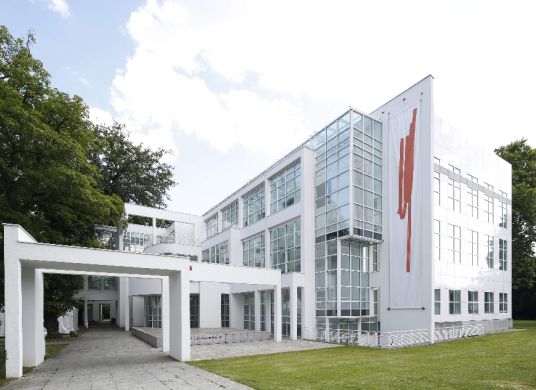
Museum Angewandte Kunst
Schaumainkai 17
60594 Frankfurt
+49 (0)69 212 34037
info.angewandte-kunst@stadt-frankfurt.de
www.museumangewandtekunst.de
U: 1-3, 8 (Schweizer Platz) Tram: 15, 16 (Schweizer- / Gartenstraße)
MON closed
TUE, THURS-SUN 10 am – 6 pm
WED 10 am – 8 pm
Municipal museum of the City of Frankfurt
largely barrier-free
Free admission for children and young persons under 18